
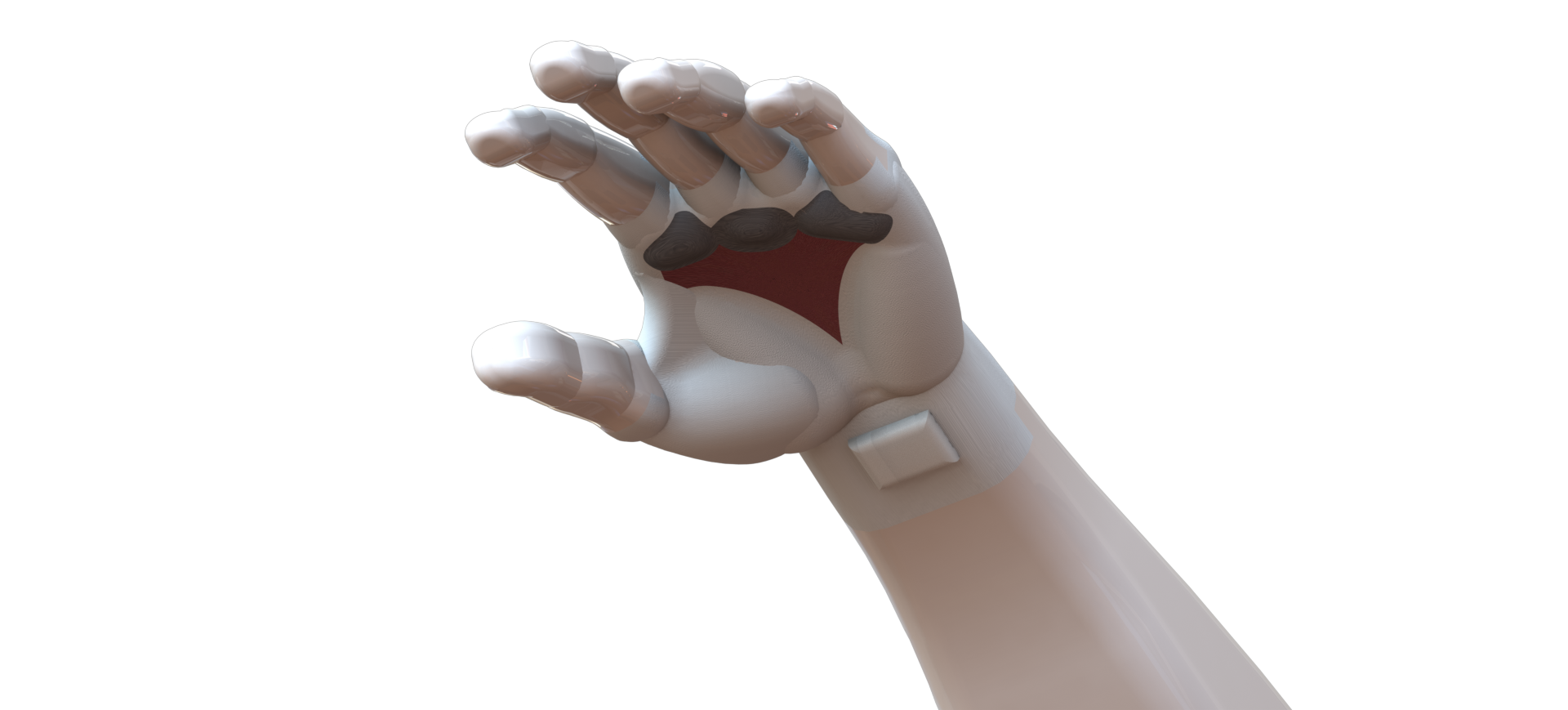
a helping hand.
This project explores the design of a future-oriented wearable addressing autonomophobia—anxiety related to autonomous vehicles in increasingly automated urban environments. Set in a 2040 mobility context dominated by driverless transport systems, the concept focuses on supporting individuals who experience uncertainty and lack of trust in these technologies. The outcome is The Helping Hand, a wearable designed to restore a sense of safety and emotional reassurance in everyday mobility scenarios.
design approach.
The wearable translates psychological and physiological insights into a tangible product experience by simulating the sensation of holding someone’s hand. Using biometric inputs such as heart rate and body temperature, the system detects moments of stress and responds through haptic feedback and warmth. This combination activates calming mechanisms in the body, leveraging known effects of touch on stress reduction and trust-building, while maintaining a discreet and ergonomic form integrated with the user’s hand.
value & impact.
The project demonstrates how emotional design can play a critical role in enabling societal transitions toward emerging technologies. By addressing not only functional safety but also perceived safety and trust, The Helping Hand contributes to a more inclusive and human-centered mobility future. It highlights the importance of designing for psychological comfort in parallel with technological innovation, positioning wearables as mediators between humans and complex systems.